
Bitcoin enters December with something it has rarely had before: a bullish statistical setup. Historically, a red November has almost always led to a weak December for BTC — but this year looks different. Investor positioning, leverage, and liquidity clusters all hint at a stronger backdrop than in past cycles.
At the same time, inflation is still quietly driving crypto adoption in high-inflation countries, while the European Union is preparing to strengthen ESMA’s oversight of crypto markets. And in altcoins, XRP sentiment has crashed into the “fear zone” — a level that, in the past, has sometimes preceded sharp rallies.
Here’s what beginners need to know 👇
Bitcoin Breaks Its Seasonal Pattern: Could December Turn Bullish?
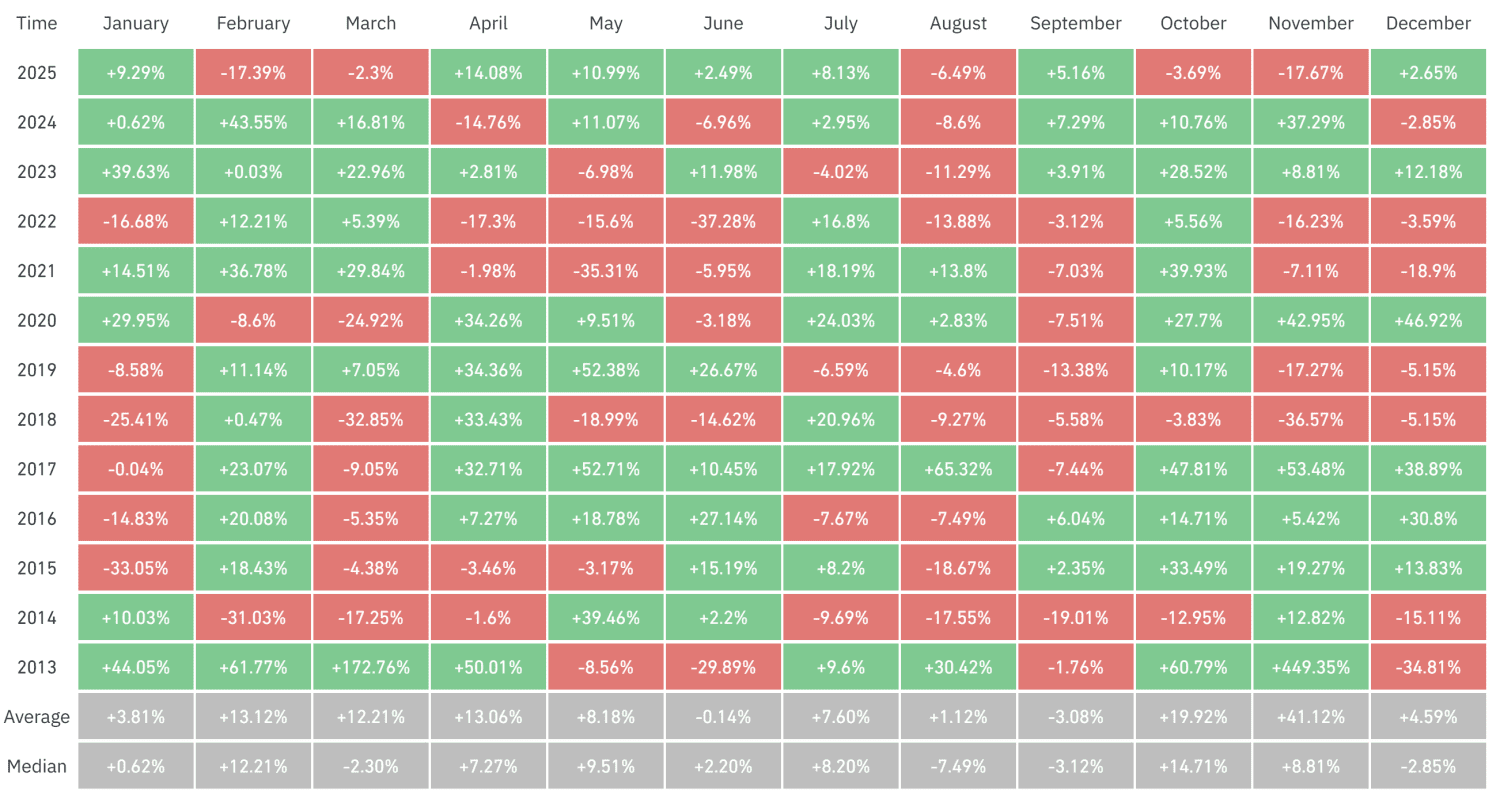
Since records began, Bitcoin (BTC) has almost never turned bullish in December after closing November in the red. Historically, a weak November was followed by a statistically bearish December, reflecting profit-taking, lower liquidity and seasonal risk-off behavior.
But 2025 is starting to diverge from that pattern.
This time, BTC enters December with several supportive factors:
- The price has reclaimed its monthly VWAP (volume-weighted average price), signaling that recent trading has normalized around a fair value zone instead of panic selling.
- Open interest in derivatives has dropped sharply from around $94 billion to $60 billion, flushing out excessive leverage and leaving a cleaner spot-driven market.
- Deep liquidity clusters have migrated to the upside: analysts note that around $3 billion in short positions could be liquidated if BTC reaches $96,000, and more than $7 billion if the price pushes above $100,000.
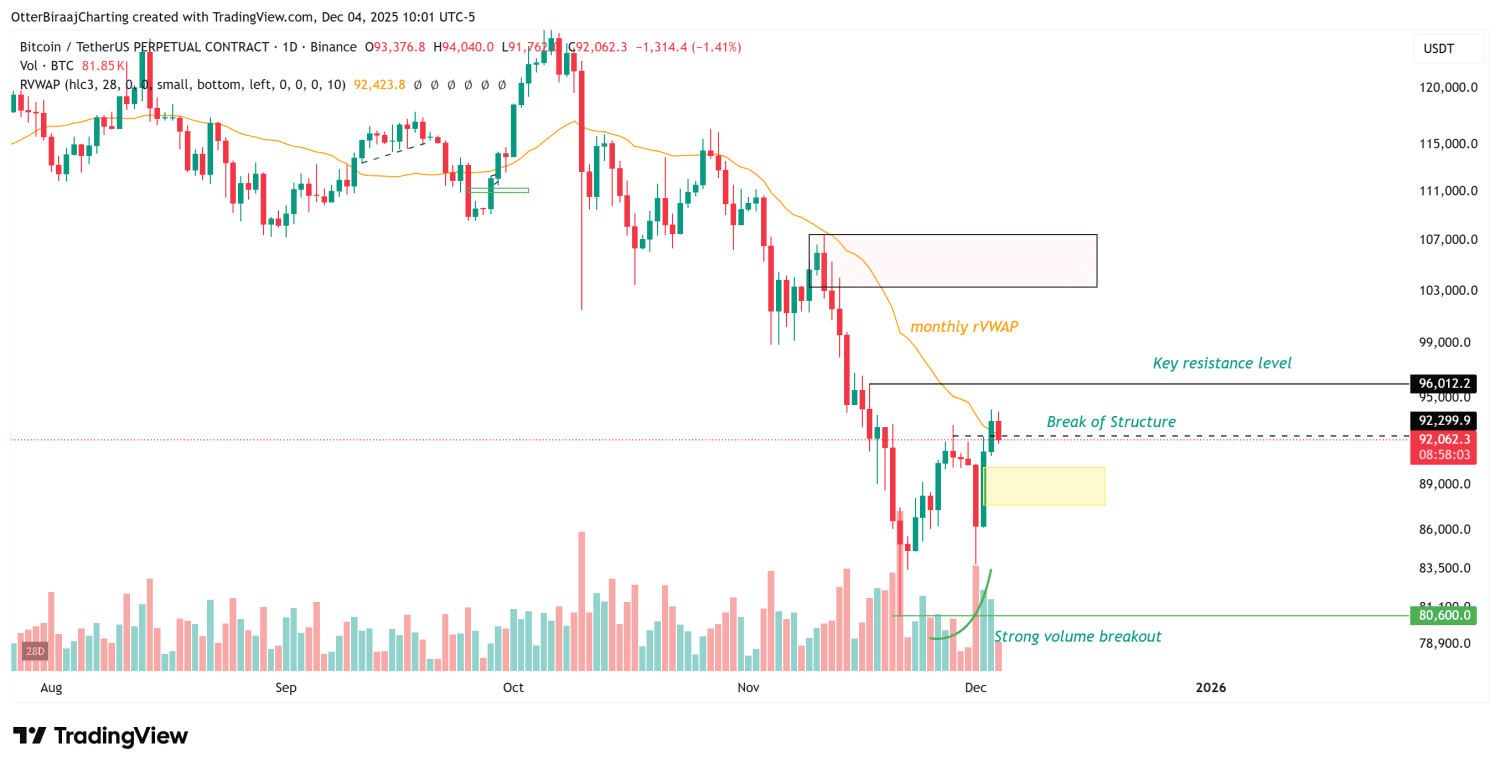
Technically, this creates a backdrop where upside moves could accelerate quickly if buyers take control. From a cycle perspective, ETF inflows and changing global liquidity conditions are also reshaping the classic four-year halving pattern, making strict comparisons to earlier cycles less reliable.
👉 Beginner takeaway: Bitcoin doesn’t always follow old patterns. When leverage drops and liquidity sits above the price, it means a cleaner market — and upward moves, if they start, can accelerate as short positions get squeezed.
Inflation Still Drives Crypto Adoption Around the World
While global inflation has cooled from its 2021–2022 peaks, many countries are still battling high or even triple-digit inflation. In these economies, everyday savers often see their local currencies lose value month after month — and more of them are turning to crypto as a store of value and escape route from failing monetary systems.
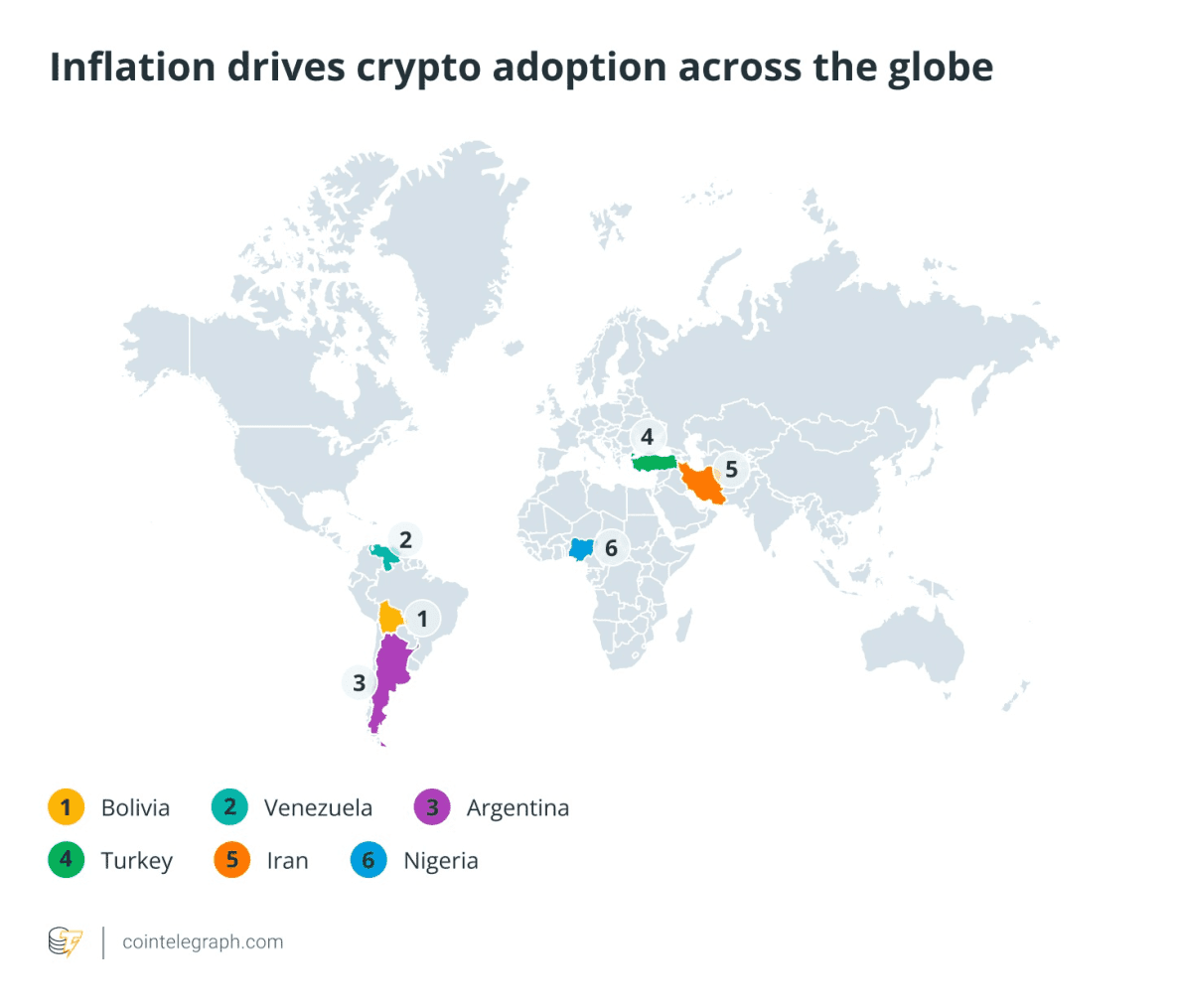
The article highlights how, in places like:
- Venezuela and Argentina, years of hyperinflation have pushed citizens toward Bitcoin and stablecoins as alternative savings tools.
- Turkey, where repeated currency crises and high inflation have made crypto a popular hedge against local currency depreciation.
- Iran, Nigeria, Bolivia and other emerging markets, where capital controls, political risk, and weak banking infrastructure increase demand for borderless, censorship-resistant money.
After COVID-era stimulus, supply-chain shocks and energy price spikes following the war in Ukraine, central banks hiked interest rates aggressively. That helped bring inflation down in many developed economies — but in others, structural issues mean high inflation is still very real.
In those regions, crypto adoption is less about speculation and more about financial survival.
👉 Beginner takeaway: In countries with weak or inflating currencies, crypto is often used as protection for savings — not just as a risky investment. It shows one of crypto’s core use cases: being an alternative when the local money fails.
EU Plan Boosts ESMA’s Powers Over Crypto and Capital Markets
The European Commission has proposed expanding the role of ESMA (the European Securities and Markets Authority) over both crypto and traditional capital markets. The goal: make EU markets more unified and competitive compared to the United States.
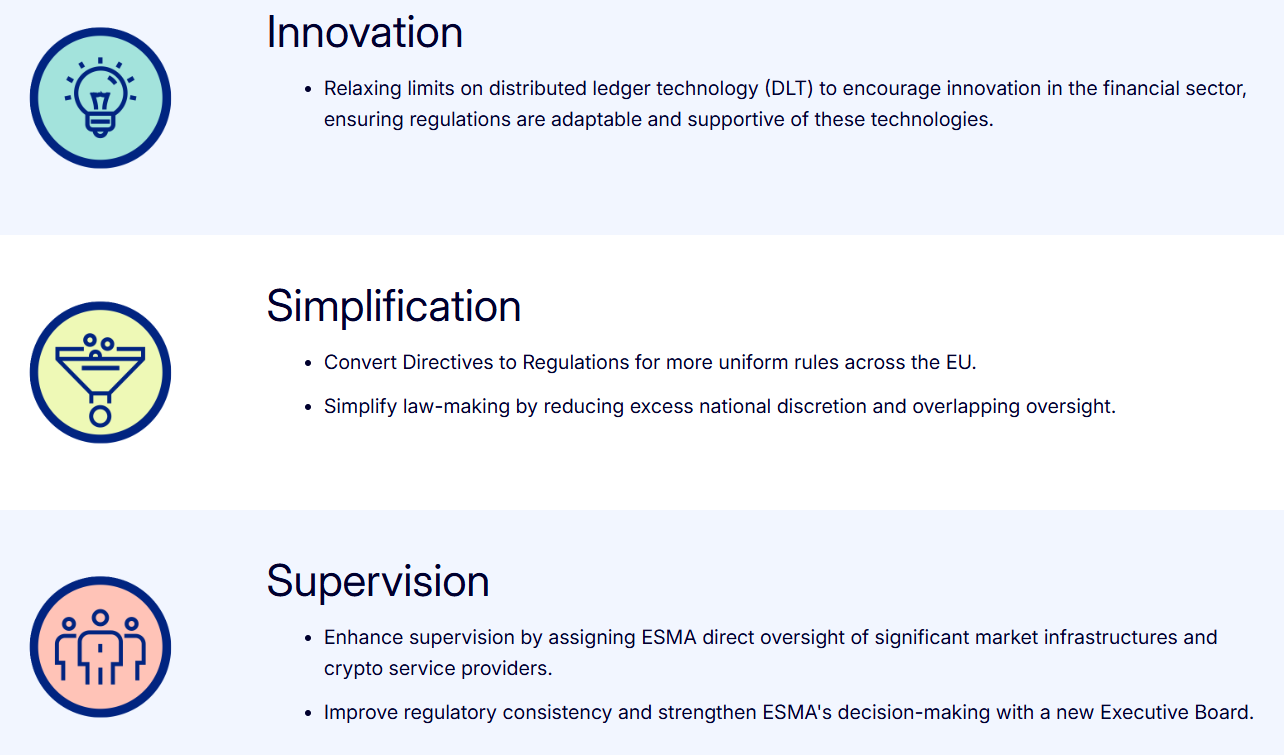
If adopted, the package would:
- Give ESMA direct supervisory powers over key market infrastructure, including some trading venues, central counterparties and major crypto-asset service providers (CASPs).
- Convert more Directives into Regulations, making rules more uniform across EU member states and reducing fragmented national approaches.
- Strengthen ESMA’s coordination in the asset-management sector with a new Executive Board and clearer decision-making structures.
This proposal still needs approval from the European Parliament and Council, where negotiations are ongoing. But the direction is clear: the EU is moving toward a more centralized, SEC-style model of supervision.
Countries like France, Austria and Italy have already called for ESMA to oversee major crypto firms directly, amid criticism that some national regimes — such as Malta’s — have not fully met expectations.
👉 Beginner takeaway: More ESMA power means stricter and more unified crypto rules in the EU. For users, that usually means stronger consumer protection and clearer regulation — but also tighter oversight of exchanges and service providers.
XRP Sentiment Plummets — But That’s Not Always Bearish
Social sentiment around Ripple (XRP) has dropped to its lowest levels since October, entering what analytics platform Santiment calls the “fear zone.” According to their data, XRP is currently seeing “the most fear, uncertainty and doubt (FUD) since October.”
Price-wise, XRP has fallen around 4–5% in 24 hours to roughly $2.10, making it the worst performer among the top 10 cryptocurrencies by market cap. It now trades about 42% below its July 2025 all-time high.
However, Santiment points out that similar levels of fear in the past have preceded strong rebounds. The last time sentiment was this negative, in late November, XRP rallied about 22% over the following days.
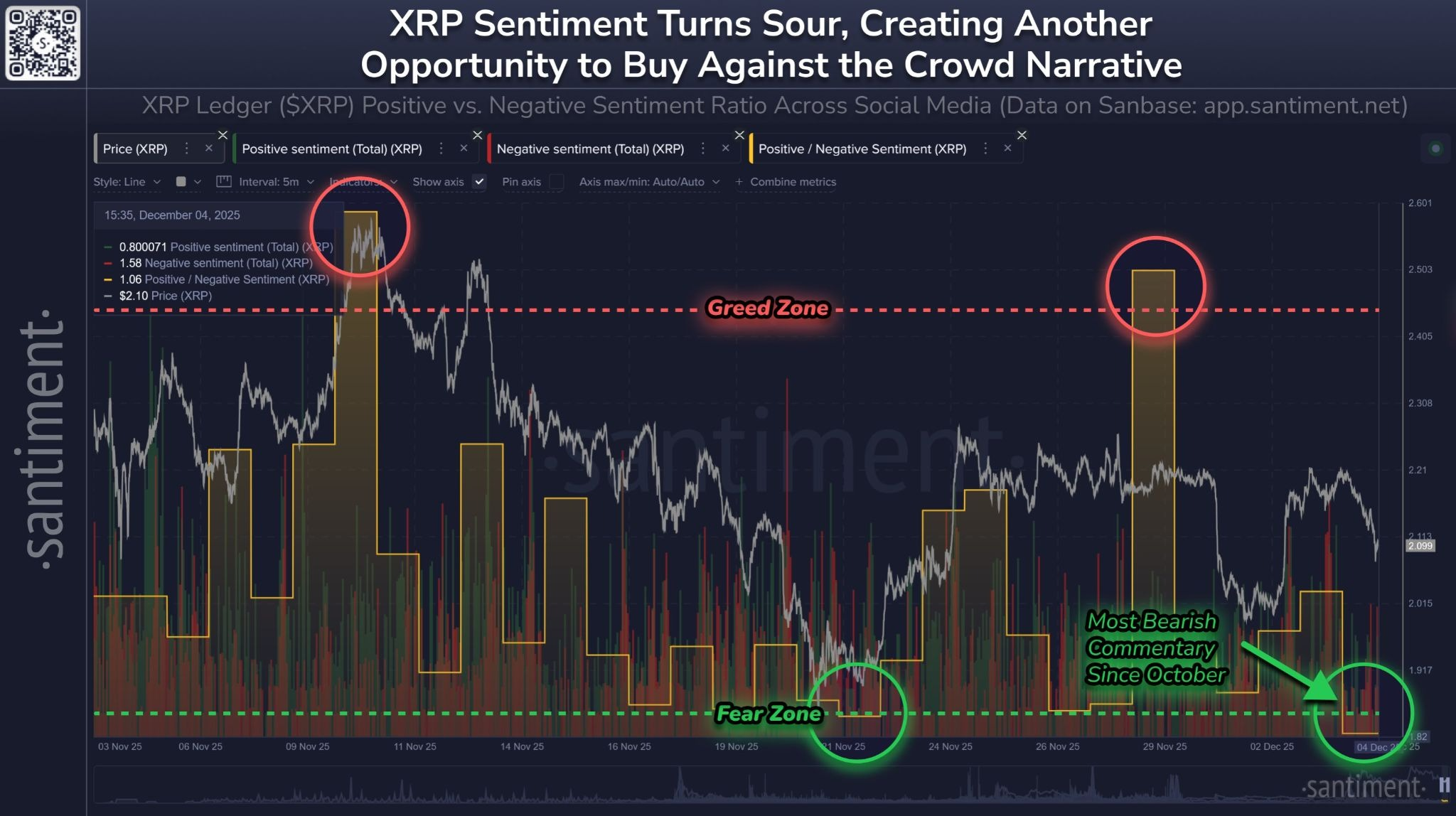
Analysts interviewed in the piece emphasize that low sentiment doesn’t automatically mean a long-term bear market. Instead, it can signal a capitulation zone, where weak holders give up just as long-term investors begin to accumulate. Some believe XRP’s long-term story still depends on regulatory clarity, cross-border payment use cases, and potential ETF flows.
👉Beginner takeaway: Extremely negative sentiment can sometimes mark a local bottom rather than the start of a long crash. But it’s never a guarantee — it just shows that many traders have turned pessimistic at the same time.
Closing Thoughts
This week’s data paints a picture of a crypto market at a potential turning point:
- Bitcoin is challenging its own seasonal history, entering December with reduced leverage, healthier derivatives positioning, and large liquidity clusters above the current price.
- Global inflation is still quietly pushing people in vulnerable economies toward crypto as an alternative to failing local currencies.
- The EU is tightening and centralizing oversight, signaling that regulation — not bans — will shape the next phase for digital assets.
- XRP shows how quickly sentiment can swing from optimism to fear — and how, in the past, that fear has sometimes come just before a rebound.
Whether December truly turns out to be bullish remains to be seen, but the foundations — from macro trends to regulation and on-chain positioning — are shifting. For beginners, the key is to stay informed, avoid emotional decisions, and think in cycles rather than days.
This article does not contain investment advice or recommendations. Every investment and trading move involves risk, and readers should conduct their own research when making a decision.
CRYPTO NEWS MADE SIMPLE
Every week, get beginner-friendly crypto news – explained clearly, with tips on how to use it for investing.
Only useful crypto tips. No noise.